 +
+
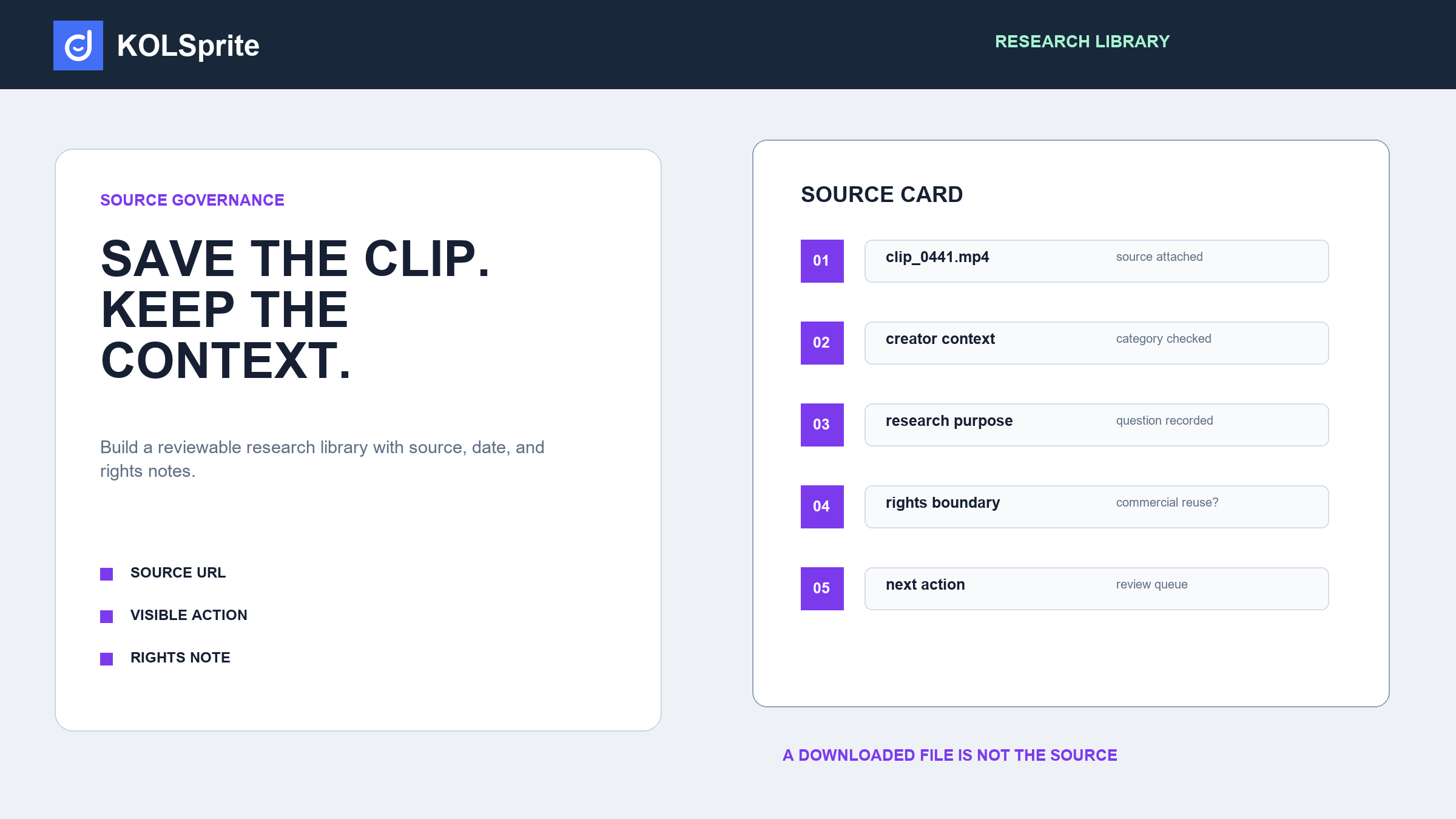
For sellers and content teams, TikTok video downloader is useful only when it helps make a real choice. This guide shows how to use source governance around a pet hair remover without overstating the data. The direct answer is simple: a downloaded file loses value the moment it is separated from its source and context. By the end, you will have a five-field source card that can guide the next brief, test, or stop decision.
The point of view: Save the source, then preserve what it can and cannot prove. The risk is treating a file as useful creative or as evidence without its limits.
The first field is the original URL. Without it, a team cannot revisit the creator, publication date, product context, or visible comments. The URL is not administrative clutter. It is the way a saved clip remains research instead of becoming a mystery asset.
For the pet hair remover question, write one line naming the buyer job, visible proof and claim limit. Keep that line beside the five-field source card so the brief stays tied to a real use case.
Do not promote the source governance phrase into product copy until the pet hair remover shows the promised action in the buyer setting: a couch, a car seat and a grooming routine.
A pet-hair-remover video can help answer whether a brush, roller, or fabric test is persuasive. It cannot automatically answer how well your product works on every surface. Record the narrow question before the file enters a shared folder.
Test the idea in a couch, a car seat and a grooming routine. Ask what a colleague would need to see before accepting it, then turn that answer into one check inside the five-field source card.
If the pet hair remover example works only in a polished setup, mark that limit. The five-field source card must survive a normal buyer condition, not only a perfect demo.
Try the source governance workflow with a real decision.
New KOLSprite users can claim a three-day trial membership to compare the product, creator and video evidence behind one pet hair remover question.
Start your three-day trial
Write what a colleague could check without reading: tool passes over fabric, fur lifts, surface changes, or a creator compares two wayes. Avoid writing the takeaway as though the clip were a controlled product test.
At the source governance handoff, attach the source and next owner. That keeps describe the visible action open to a later check instead of turning it into a takeaway nobody can revisit.
Keep the original wording beside the five-field source card. That lets the team separate what was observed, what was inferred and what still needs a test.
Place a short rights and claim note beside the clip. Downloading for internal research does not grant business reuse rights and a creator’s language is not approved product copy. TikTok’s copyright guidance is the right place to check platform-level boundaries.
If the pet hair remover result is weak, record the missing proof, fit, offer, or cost beside the five-field source card. A precise failure note prevents the next browse from repeating the same mistake.
A weak source governance result can still teach the owner what to change. Record the missing pet hair remover fact instead of smoothing it over with a stronger headline.
| source governance field | What to record | Decision it supports |
|---|---|---|
| Observed signal | a public pet-tool video returned 1.6 million visible plays and 998 units in its recent-sales field | Whether the pet hair remover example deserves closer review |
| Proof need | One visible action in a couch, a car seat and a grooming routine | What the next brief must demonstrate for this use case |
| Known limit | treating a file as useful creative or as evidence without its limits | What the team must check outside public platform data |
| Next action | a five-field source card | A named test, hold, or handoff for this decision |
Source Governance source note: KOLSprite MCP public US-market snapshot for the pet hair remover, accessed August 7, 2026. This example shows how to use a five-field source card. It does not estimate the whole category.KOLSPRITE_DISCORD_CTA
Treat every downloaded file as a research record. Keep the source URL, creator name, date saved, visible product, useful moment and intended research question beside the file. A clear filename is helpful. But the surrounding note is what makes the asset useful a week later.
A simple weekly cleanup also protects the library from becoming a dumping ground. Remove duplicates, mark clips that need rights review and promote only the examples that teach a repeatable hook, demo, objection, or editing choice. The goal is a smaller library that a team can actually use.
KOLSprite connects the download step to the judgment step: inspect the video, study the creator, read the audience response and decide whether the asset belongs in a brief, a test folder, or nowhere at all.
A downloaded clip remains useful only when its source and research purpose stay attached. Before you share the source card, mark what was observed, what was inferred and what still needs a check.
The library owner should leave one source record, one rights question and one reason to keep the file for future research.
When the team reuses the library, revise the source card and keep the original creator context attached.
Close the source record by naming the file, original creator, research purpose, rights boundary and date for the next library review. Save the clip beside its original URL and let the next library review decide whether it belongs in a brief or an archive.
Want a second set of eyes on the five-field source card?
 +
+
Join the KOLSprite Discord community
Once a week, remove files that do not change a decision. Promote only the sources that inform a creator brief, a product test, or a buyer-objection list. A smaller library with clear tags is more valuable than a drive full of popular clips.
Keep the detail that changes the next source governance brief. The five-field source card should make the pet hair remover choice easier to defend, not summarize every signal in the category.
Use the five-field source card to choose one next clip, creator, listing change, or sample check. More examples are not better when the pet hair remover decision stays open.
The extension is helpful when researchers are already browsing TikTok and need to save a video alongside its context. That reduces rework later because the team can compare the source with product, creator and content detail before taking action.
Finish the KOLSprite step by naming the next move: test, hold, compare, or stop. KOLSprite can keep the pet hair remover source and creator context near that choice for the next owner.
This research library protocol is complete when another owner can explain the pet hair remover choice and repeat the check without asking for hidden context.
For source governance work on a pet hair remover, keep the buyer job intact when the format changes. The TikTok video downloader question decides whether this source becomes an Amazon brief, a Shopify page test, or a creator request.
Start the pet hair remover handoff with the scene that makes the need obvious: a couch, a car seat and a grooming routine. For a source governance review, ask which action earns belief and which product limit must appear before the viewer accepts the claim.
Give the five-field source card its own source, signal, proof, limit and next-action fields. In a source governance handoff, that small record shows why the example matters without sending the next owner back through a folder of screenshots.
In this research library protocol, compare the source governance example with a couch, a car seat and a grooming routine. A high-play result is not enough when treating a file as useful creative or as evidence without its limits. Record the proof gap, creator fit and next choice in the five-field source card.
Run the smallest source governance test that can change the choice. For this source governance work, expand a supported test idea, record a failed one and move on when the pet hair remover evidence stays weak.
A useful TikTok video downloader process ends with one concrete commitment: who will run the next source governance check, which pet hair remover condition they will review and what result would alter the plan. Keep the source beside the takeaway for a five-field source card, then decide whether the next move is a test, a hold, or a request for better evidence.
For a related next step, use browser research tools, compare it with source video search and move the resulting decision into video-search workflow. For the platform-level boundary relevant to this research library protocol, see TikTok copyright guidance.
Latest Articles

As an essential, data-driven toolkit for TikTok influencers and marketers, KOLSprite provides powerful features for effortless creator discovery, trending content identification, and actionable real-time insights.
It empowers users to make smarter decisions and significantly boosts their TikTok business.

 Refer & Earn