 +
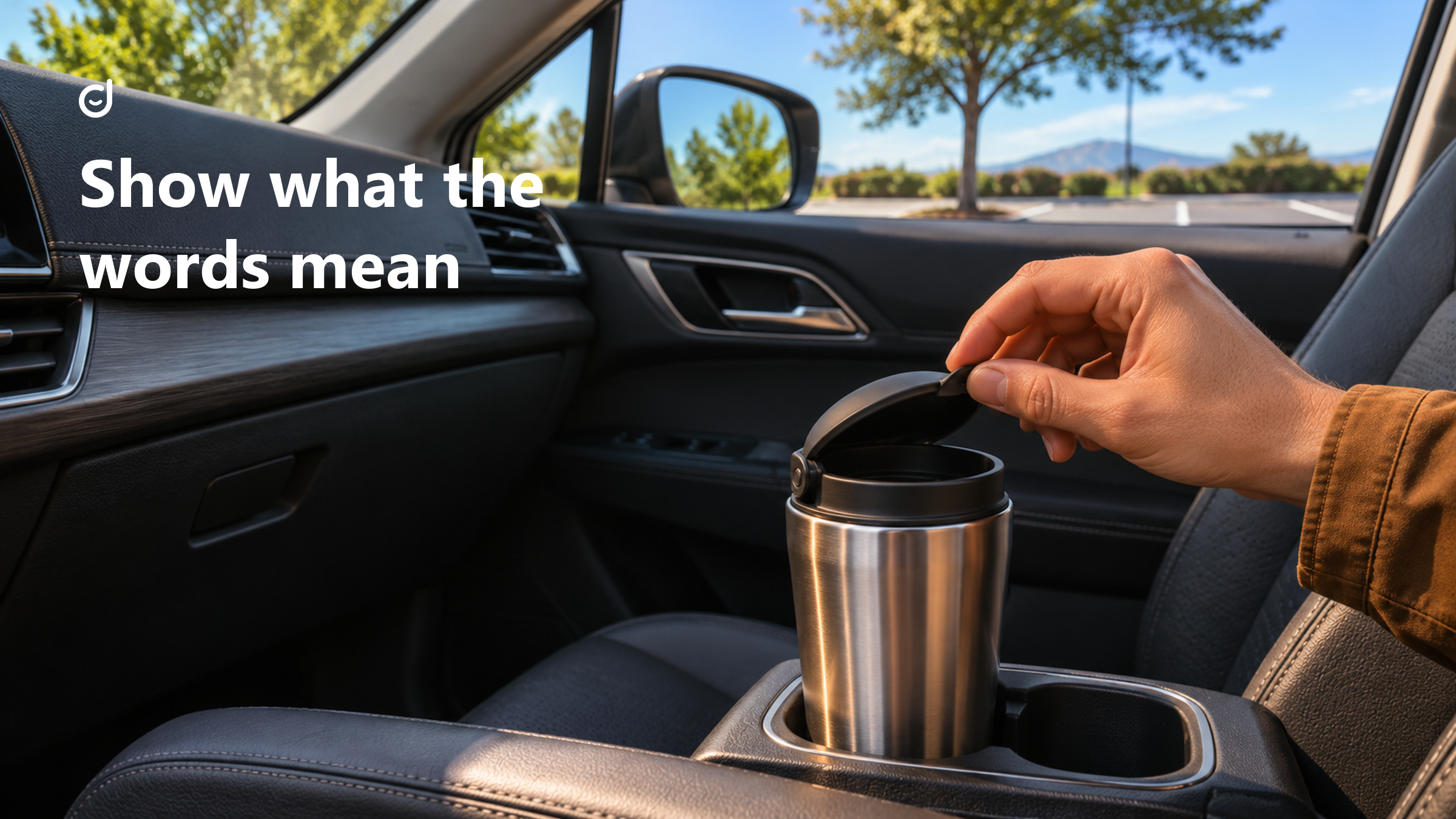
When planning TikTok B roll, start with the line the viewer will hear. Then choose a shot that shows something useful about that line. If the speaker says a travel mug fits in a car, show the mug in the actual cupholder. A slow shot of steam may look good, but it cannot answer the fit question. This guide takes a sample edit apart so you can choose better supporting footage before the next shoot.
B-roll is supporting footage used around or over the main action or speech. It might show a detail, a process, a setting or a result. It can cover an edit, but hiding a cut is not its only purpose. The strongest cutaways help a viewer understand the product while the voice carries the thought forward.
Imagine a hypothetical video about a travel mug. The speaker says, “I wanted something I could take on my drive to work.” The edit cuts from a person at a desk to a close-up of steam rising from the mug. The picture establishes a warm drink, but it leaves the driving part of the line unexplained.
Now use a different shot: a hand sets the mug into a parked car's cupholder, releases it and reaches for the lid. That image supplies context the words alone cannot. The viewer can judge the visible fit in that particular holder. You have not changed the script or added a grand claim. You have made one part of the message easier to inspect.
That is the core editing choice. Before you gather beautiful shots, ask which part of the message needs an image. A detail shot can show how a latch works. A wide shot can show the space a product occupies. A process shot can show a task from start to finish. These are different jobs, even when all three clips feature the same object.
The approach also helps with TikTok video ideas. A concept that sounds promising may need a visual action you have not yet planned. Find that gap before the camera is packed away.
TikTok's home-and-living creative material describes brand stock footage, including B-roll and product clips, as a creative input. That establishes a place for these assets. It does not mean that any collection of clips will support any message, or that a particular editing pattern guarantees better results.
| Material | What it can contribute | What the editor must still decide |
|---|---|---|
| Brand stock footage or product clips | A source of real product images and actions. | Which clip actually matches the current line. |
| A specific demonstration | A view of one action in a known setting. | Whether the setting and product match the spoken claim. |
| A decorative cutaway | Texture, atmosphere or a change of view. | Whether it helps the thought or delays the answer. |
Source: TikTok's home-and-living creative material, checked November 18, 2026. The shot roles are editorial interpretations, not measured retention findings.
A decorative shot is not wrong just because it supplies no proof. It may create a calm opening or let a viewer see the item's surface. The mistake is using it where the message needs an answer. Keep atmosphere when it earns its time, and choose a more concrete image when a buyer needs to understand the action.
Open the matched KOLSprite research entry and check current access and supported features; no free-use entitlement is promised. Use desktop Chrome. On a phone, open this article on your computer to install the extension.
Explore the research extension
The following is an original planning example, not footage from a real test. It assumes a mug you can physically handle and a parked car you can safely film. No cooling time, spill resistance or other performance result is claimed. Those would need their own suitable evidence.
Line: “This is the mug I want to take on the drive.” Start with the actual mug beside the bag or keys used in the scene. A brief wider view establishes the setting. Avoid opening on a generic driving clip where the mug does not appear. The viewer should know which product the next detail belongs to.
Line: “The base fits in this cupholder.” Show the mug going into that holder, then let go. Keep enough of the console in view to make the action clear. A tight crop of the mug's base can hide the fit rather than explain it. Name the setting as the one being shown, not every car the buyer might own.
Line: “I can open the lid with one hand.” Show the real hand movement at a pace a viewer can follow. Use the same lid and product version throughout the scene. If the movement is awkward, fix the setup or revise the line. Speeding past the action may make the edit feel brisk while removing the detail it was meant to show.
Line: “Here is what I need to clean afterward.” Lay out the parts that the actual care instructions allow you to remove. Show the part names or shapes clearly. Do not add a dishwasher symbol, soak a component or show a cleaning step unless it is appropriate for that product. A useful final cutaway can answer a care question without making a broad durability promise.
The sequence is not a rule for every mug video. It shows how each image can carry a specific part of the explanation. If your message concerns a handle, the handle needs a meaningful action. If the message concerns storage, the setting may matter more than a close-up of the finish.
A wide view and a detail of the same action give an editor options. The wide view tells the viewer where the action happens. The detail shows the part that matters. Film both when you need them, but do not assume every action requires a large set of angles. Extra footage takes time to review and can hide the absence of a clear main shot.
Keep the important facts steady between takes. The mug should not switch color, the lid should not change position and the amount of liquid should not jump without a reason. A viewer may not name the continuity error, but the scene can become harder to follow. Note any intentional change so the editor does not have to guess.
Hold the camera long enough to include the action's beginning and end. A clip that starts after the mug has entered the holder may be hard to use for a fit claim. A clip that cuts off while the lid is still moving may force an awkward edit. A little clean time on either side gives room to join the shot naturally.
Check the footage before you leave the location. Look for focus, glare and a hand that blocks the detail. This is not a demand for perfect lighting. It is a chance to catch a missing view while it is easy to film again. A clean, ordinary shot often explains more than a dramatic one.
Join the KOLSprite Discord to discuss the question behind your next research task.
 +
Join the KOLSprite Discord community
If you are studying TikTok B roll in other videos, KOLSprite's documented subtitle and script research can help you inspect the spoken message. Start with the sentence, note what it asks the viewer to believe, and watch the image shown at that moment. The useful output is a question for your own shoot, such as whether a wider view is needed to show the fit.
A transcript does not tell you what the camera showed. Check the actual video before recording a visual observation. KOLSprite is a research aid in this workflow, not a video editor or a guarantee that every reference is available. Current input support, controls and plan access should be checked in the product.
Keep notes in ordinary language. “Show the lid closing” is a better production direction than an abstract label about evidence. You can use a source link and a short timestamp to find the reference again, but your final brief should describe an original action with your own item. Studying a cut does not give you the right to reuse someone else's footage.
For a more detailed text-review method, see how to research a video transcript. Use only the parts that help answer your actual editing question; collecting every line can become another task without a clear payoff.
Sometimes the best supporting shot is no cutaway at all. If a person is explaining a real preference, a continuous account may carry meaning that a product montage removes. If the important action is already visible, cutting to another angle can make it harder to inspect. Stay with the shot when it is doing its job.
Watch the rough edit once with the pictures in mind and once with the message in mind. In the first pass, look for any moment that makes the product or action hard to identify. In the second, ask whether each spoken point has the right support. The passes are a review exercise, not a claim about how all viewers watch.
Then try removing one cutaway. If the sentence becomes clearer or the action reads better, the extra clip was not helping. If the edit loses a needed detail, put it back or find a stronger version. This is a more useful test than counting how often the picture changes.
The guide to TikTok storytelling looks at the larger role a product can play. At the shot level, the same question is small and practical: what does the viewer learn from this image right now?
Build your next filming list around the answers to that question. You may need fewer clips than you expected, but each will have a clear use. Good TikTok B roll is not a pile of attractive footage waiting for a script. It is a set of images that makes the chosen message easier to understand.
Latest Articles
As an essential, data-driven toolkit for TikTok influencers and marketers, KOLSprite provides powerful features for effortless creator discovery, trending content identification, and actionable real-time insights.
It empowers users to make smarter decisions and significantly boosts their TikTok business.

 Refer & Earn